
The One Thing Parents Get Wrong About Visiting Rome with Kids
The biggest mistake families make in Rome is trying to see too much. Children don’t remember the longest itinerary – they remember the moment they felt part of the story.
After ten years of planning family trips through this city, we’ve noticed the same pattern again and again. The families who have a difficult time in Rome are almost never the ones who saw the least. They’re the ones who tried to see everything.
Here’s the mistake – and the much simpler approach that actually works.
The Itinerary That Looks Perfect on Paper
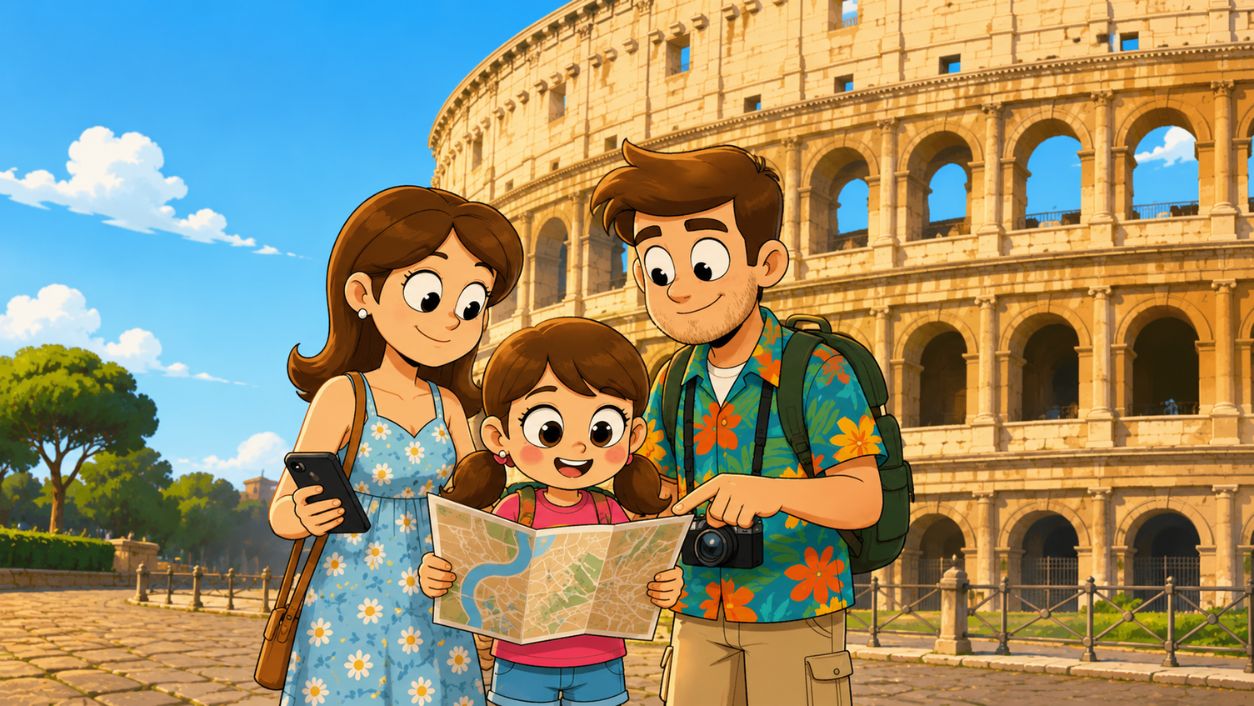
It’s easy to build a Rome itinerary that looks impressive. Colosseum in the morning, Roman Forum right after, Pantheon for lunch, Trevi Fountain in the afternoon, Spanish Steps before dinner. Five major sights, one day, technically achievable if you keep moving.
On paper, this is efficient. In practice, with children, it’s often a disaster.
By sight three, most children have stopped absorbing anything. They’re not seeing the Pantheon – they’re seeing a building, the tenth building of the day, indistinguishable from the others except for how much their feet hurt by that point. Parents end up dragging tired, overstimulated kids through increasingly resentful silence, while quietly wondering why a trip to one of the most beautiful cities on Earth feels this stressful.
Why More Sights Doesn't Mean More Memory
Here’s what a decade of doing this with thousands of families has taught us: children’s memory doesn’t work by quantity. It works by intensity.
A child who visits one site and has a genuine moment there – finding a hidden detail, solving a riddle, hearing a story that actually surprised them – will remember that site vividly, often for years. A child who is walked past five sights with general information delivered at each one will likely remember none of them clearly, and will associate the whole day with exhaustion rather than wonder.
This isn’t a theory. It’s something we’ve watched happen, trip after trip, family after family. The day with three meaningful moments beats the day with ten rushed ones, every single time.

The Three-Moment Rule
Our actual planning advice, after years of refining it: pick three moments for the day. Not three sights – three moments. A moment is something specific enough that your child will remember the feeling of it, not just the name of the place.
“We went to the Colosseum” is a sight. “We found the spot where gladiators secretly appeared from underground, and Mia figured out how the trapdoors worked before I did” is a moment.
Three real moments, with breathing room between them – for lunch, for gelato, for simply walking without an agenda – produce a day that feels rich rather than rushed. Five or six rushed sights produce a day that feels, to a child, like one long blur with sore feet at the end of it.
What This Looks Like in Practice
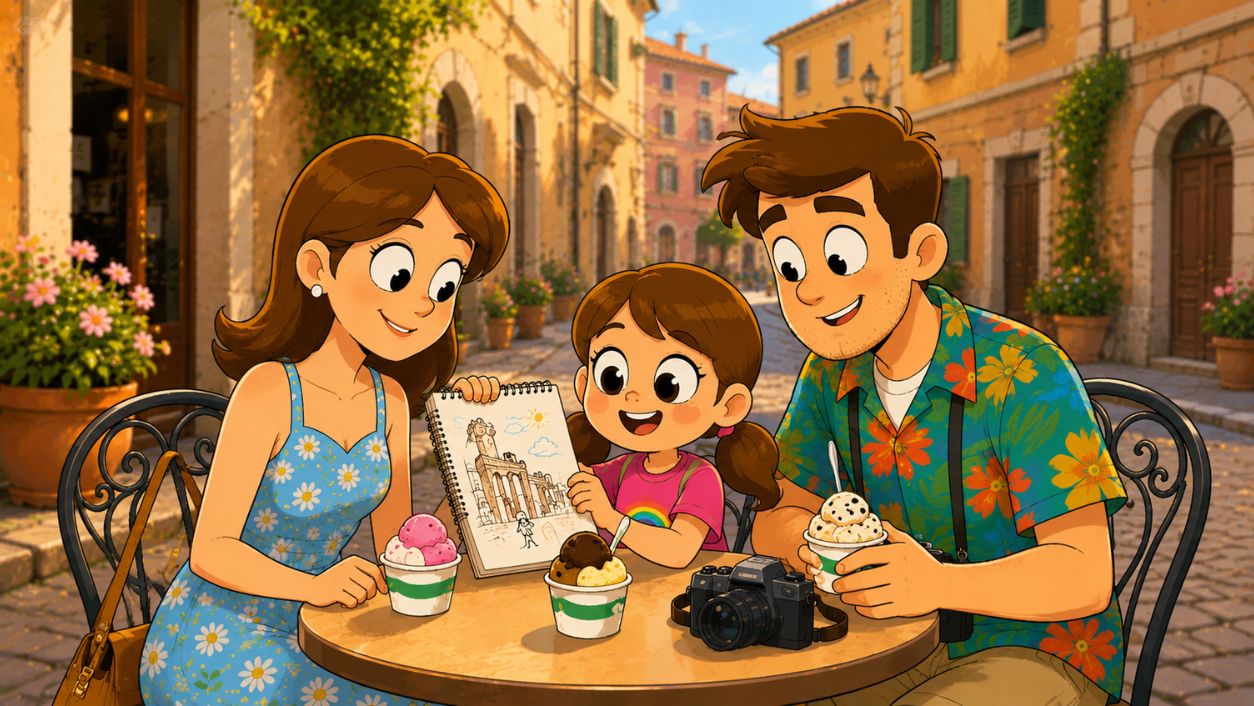
A genuinely good day in Rome with children, built around this principle, might look like: a relaxed morning at the Colosseum, with time to actually engage with one or two specific stories rather than rushing past every plaque. A long lunch – properly long, the way Italians do it – rather than a fifteen-minute sandwich eaten while walking. An afternoon at one more site, chosen because it has something specific to discover, not because it’s famous. And then unstructured time – a park, a gelato, watching a street performer – that doesn’t feel like “sightseeing” at all but is often what children remember most fondly.
This is a shorter list than most Rome guides recommend. It is also, consistently, the version of the day that ends without a meltdown.
The Hardest Part for Parents
Here’s the part that’s genuinely difficult, and we say this with real sympathy: choosing to see less feels like wasting an opportunity, especially if this is a once-in-a-lifetime trip. There’s a nagging voice that says “but we’re here, we should see the Pantheon too, we’re so close.”
The honest answer is that you can absolutely add a fourth stop if everyone still has energy. But it should be earned by how the day is actually going – not pre-planned out of fear of missing something. A flexible day with three strong moments and the option for a fourth, decided in real time based on your children’s energy, will always outperform a fixed list of six.
Why We Built LooksArt Around This Exact Idea
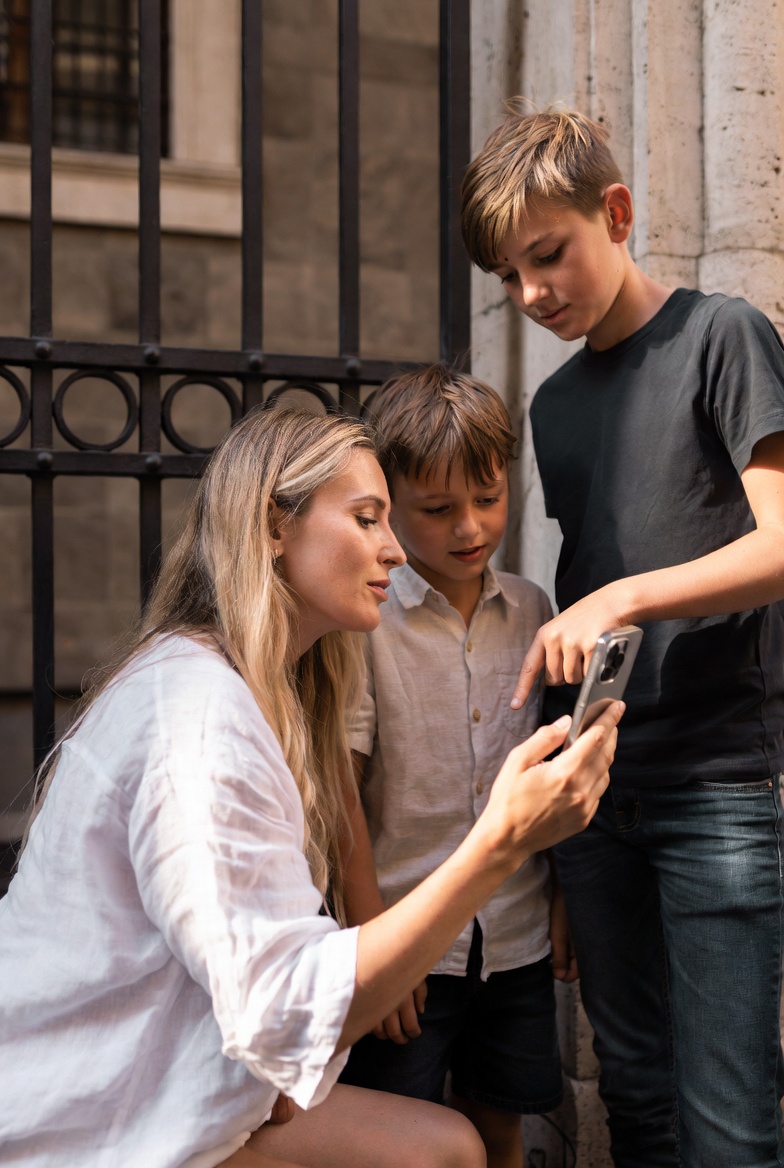
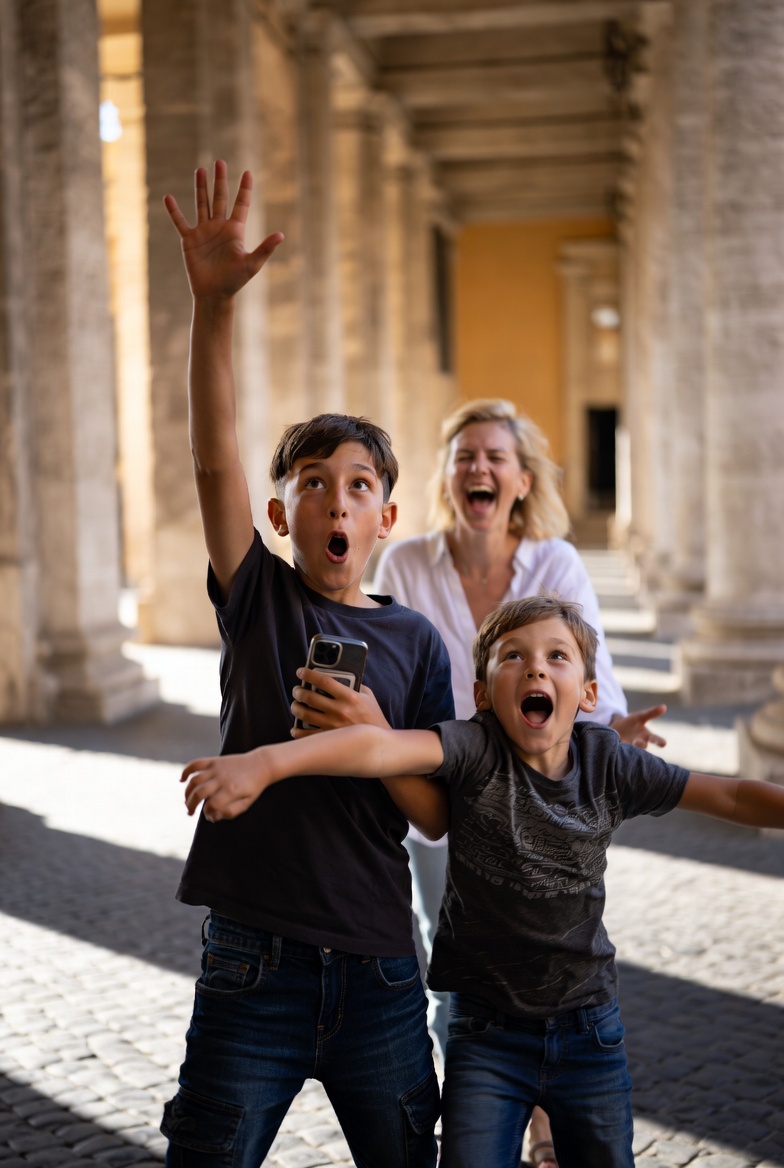
This is the entire philosophy behind LooksArt. Each adventure – whether it’s the Colosseum, Historic Rome or the Vatican — is built around one location and one story, designed to be experienced fully rather than rushed through.
There’s no pressure to “complete” five sites. There’s a single mission, paced for a child’s actual attention span, ending with a real reward. It’s the three-moment philosophy built directly into the product: less ground covered, more actually felt.
“What I hear, I forget. What I do, I understand.” – Aristotle
A child who does one thing fully will remember it longer than a child who sees five things quickly. This is true of Rome. It’s true of most things with children.
🗺️ GET OUR FREE SMART FAMILY MAP
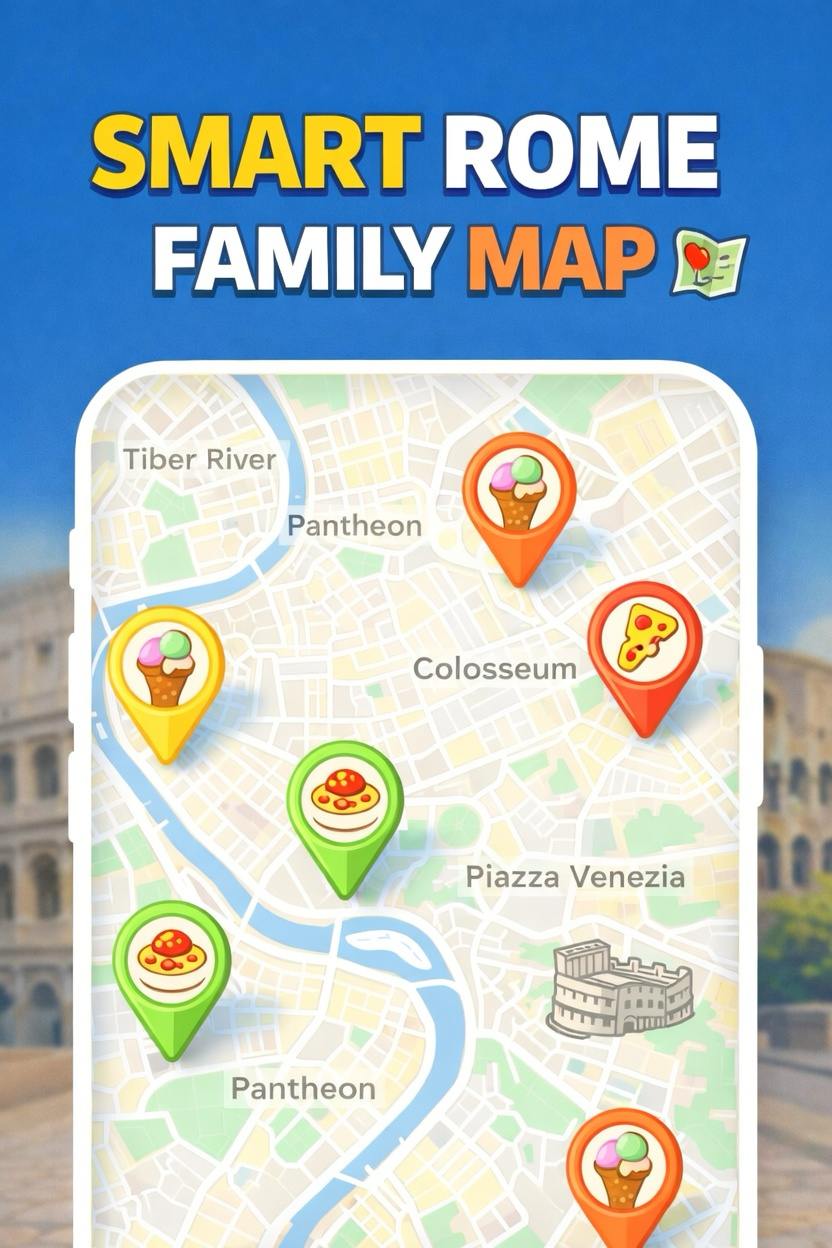
A realistic, slowed-down route through Rome’s best family moments – tested by a local Rome mum with 10 years of experience.
Follow us on Instagram @looksart.eu and send MAP in a direct message. 🗺️